Project Artemis-Devlog 2
Vision
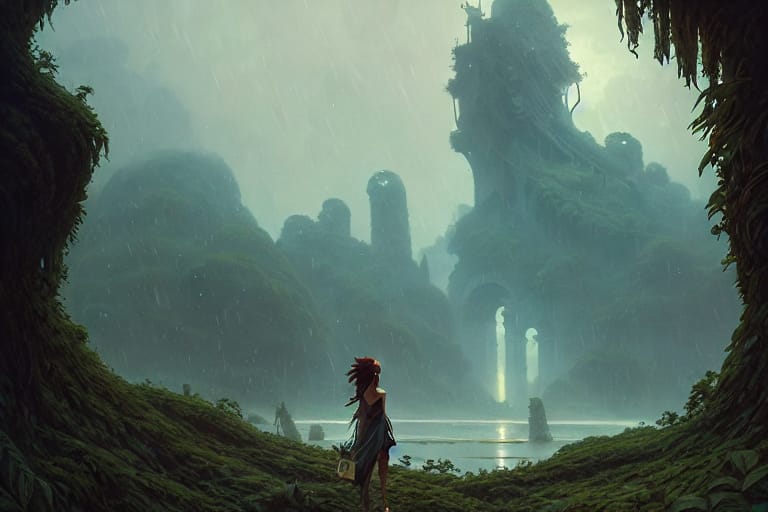
With project Artemis the intention is to create a strong narrative adventure game that allows the player to interact and explore a terrifying and mythical world. While the game’s design is reminiscent to that of Walking Sim’s, but it expands on the formula by having players to be more interactive with the world around them, focus on environmental storytelling and having sort of lite horror-like elements.
The inspiration for this project come’s from games such as “What Remains of Edith Finch”, “Call of the Sea” and “Portal” and from young adult novels like Percy Jackson by Rick Riordan and Underworlds by Tony Abbot.
Design
Over the last two weeks, I have made some drastic changes on the design side in order to scope it and better relate to the narrative vision. The major changes were to shift from an open world to linear based progression and design, as I felt it to narrow down the scope, enrich and better support the narrative. The other change was to cut-down the survival elements from the project, as I felt it was drifting away from the vision and switching to linear based game design meant the survival elements would feel like a hinderance and distract players from narrative.
Core Design Pillars
1. Narrative : the game features a gripping narrative that evokes layers of emotions within players. It helps with pacing and general progression of the game. The goal with narrative pillar is to ; make the players relate to the event’s occurring or have occurred in the world.
2. Puzzles : puzzles are designed to support the narrative and to make the world feel more interactive, it adds a layer of challenges for the player to overcome.
3. Movement : the movement system is designed to be robust and help players to traverse the world that is filled with environmental challenges more efficiently and smoothly. It features simple parkour system that player can use to vault, climb, slide and perform high jump. In addition there are opportunities in the environment to combine this abilities to make traversing more engaging.
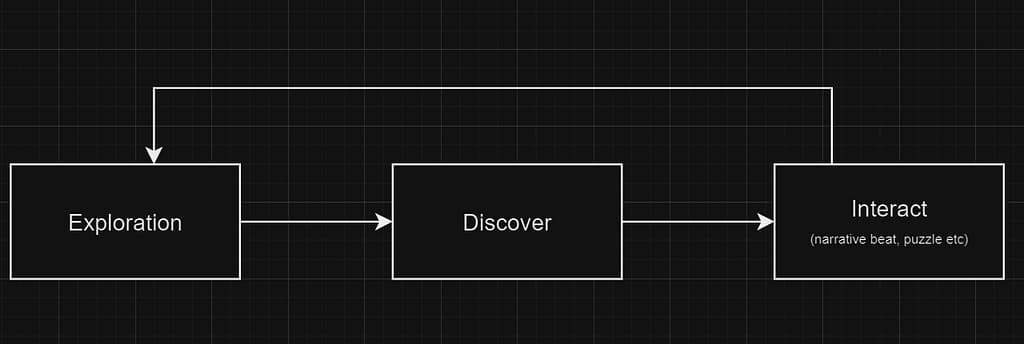
Game loop and Progression
Player Motivation and Progression
The game is targeted towards the Slayer Player Type. But what is a Slayer?
According to the study by Quantic Foundry; Slayers want to be the heroic protagonists in a cinematic story. They enjoy games with strong creative visions and highly curated narratives and experiences. They usually look for slower-paced, accessible gameplay and care very less about power progression or strategic planning, they want to experience the game as it unfolds in the moment.
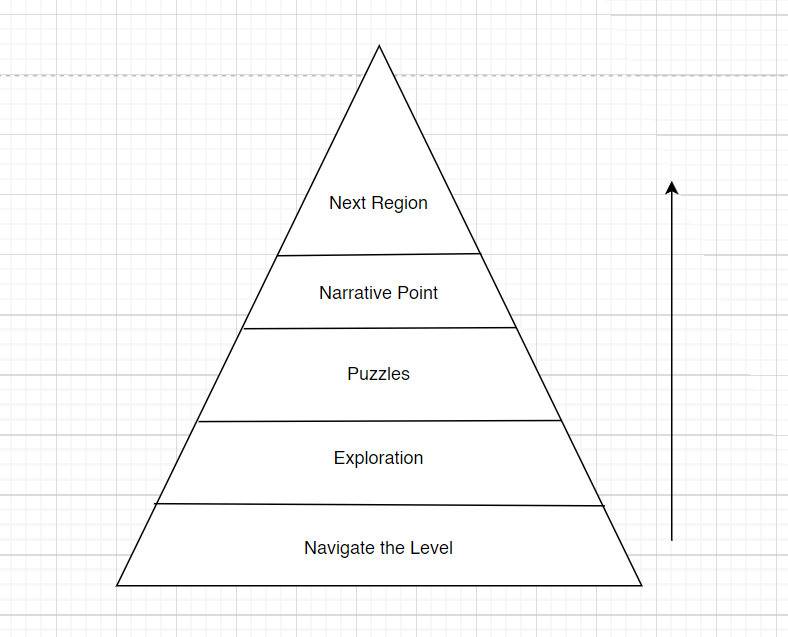
Progression:(subject to change or update over the course)
Progression
Navigate Level :
Player can explore the level and are awarded with hidden narrative points, collectibles or they can move to main story elements, the optional narrative points expands more on the lore and can hint towards hidden secrets and locations.
Solve Puzzles :
Some sections of the region requires player to solve puzzles in order to navigate further or to unlock the narrative.
Narrative Points :
Provides context to the player and progresses the story forward. Can be in the form of cutscenes, NPC dialogue or item pickups such as journal entries and audio logs.
Complete and move to next region:
Each region has certain narrative and puzzle objectives that needs to be completed, on completing these objectives the player can progress to new region.
Outro
Thanks for reading and let me know in the comments if something’s unclear. While I discussed some of the core design elements of the game, there’s still a lot in terms of core design as well as secondary design elements.
For the next devlog, I would cover some of the story and narrative elements and sneak peek into the world-building(in terms of writing/narrative).